

When Should a Hairstylist Refer a Client to a Dermatologist?
When should a hairstylist refer a client to a dermatologist? A red-flag checklist, word-for-word scripts, and a simple referral note template for the salon.

When should a hairstylist refer a client to a dermatologist? Refer whenever you see hair loss or a scalp change that you cannot explain by styling, product use or ordinary dryness, and refer quickly for any red flag: smooth bald patches, sudden heavy shedding, pain or burning, pustules, crusting, open sores, shiny scar-like skin, or hairline loss with eyebrow loss.
Stylists are often the first to see these changes, because they see the crown, the nape and the part line under good light every few weeks. Seeing it is your job. Naming it and treating it is the physician's job.
Can a hairstylist diagnose scalp conditions or hair loss?
No. A hairstylist or cosmetologist cannot diagnose scalp conditions or hair loss, and cannot prescribe or recommend medical treatment. Diagnosis belongs to physicians. Within a salon, the professional's role is to recognize that something has changed, support the client with appropriate cosmetic care, and refer to a dermatologist.
Scope of practice for a cosmetologist on scalp concerns
The exact services a cosmetology or barber license covers are set by each state board, so check yours. The general line is consistent everywhere.
| Within a stylist's role | Not within a stylist's role |
|---|---|
| Observing the scalp and hair | Naming a disease or condition |
| Describing what is visible in plain words | Telling a client the cause of their hair loss |
| Taking notes and photos with consent | Ordering or interpreting lab tests |
| Adjusting services to reduce tension or irritation | Recommending prescription or over-the-counter drugs, or doses |
| Recommending a dermatologist visit | Promising regrowth |
This also applies to trichologists. "Trichologist" is not a state-licensed medical title in the US, and trichologists are not physicians. Training in trichology makes you better at recognizing what you see. It does not change who diagnoses. Our article on the trichologist vs dermatologist roles explains the difference in detail.
What are the red flags that mean a client should see a dermatologist?
Eight findings should trigger a referral: smooth bald patches, sudden heavy shedding, pain or burning or tenderness, pustules or crusting, shiny skin with no visible follicle openings, hairline loss with eyebrow loss, open sores, and any rapid change. One is enough. You do not need to know the cause to refer.
The red-flag checklist
- Smooth, round or oval bald patches. The American Academy of Dermatology (AAD) describes alopecia areata as often starting with a round or oval, smooth balding patch on the scalp or beard.
- Sudden heavy shedding. The AAD says it is normal to shed between 50 and 100 hairs a day. A client who is suddenly losing far more than their usual amount should see a physician to look for the trigger.
- Pain, burning, stinging or tenderness. The AAD lists a scalp that burns, stings or itches among the symptoms some people with central centrifugal cicatricial alopecia (CCCA) experience.
- Pustules, crusting or oozing. These may point to infection or active inflammation, which needs medical assessment. Do not perform services over them.
- Shiny, smooth skin where hair used to grow. The AAD notes that where frontal fibrosing alopecia has scarred the follicles, you see smooth, hairless skin.
- A receding hairline together with eyebrow thinning. The AAD lists loss of eyebrows and a receding hairline among the signs of frontal fibrosing alopecia, and eyebrow loss can come first.
- Open sores or a spot that does not heal. Any sore, bleeding area or changing growth on the scalp needs a physician.
- Rapid change. A patch that is visibly larger than at the last appointment, or thinning that has progressed quickly, should not wait.
Also refer when a child has patchy hair loss or scaling, and when hair loss comes with other symptoms the client mentions, such as feeling unwell.
What about gradual thinning or breakage at the hairline?
Refer these too, with less urgency. The AAD lists broken hairs around the forehead, a receding hairline and patches of hair loss where hair is pulled tightly as early signs of traction alopecia, and warns that it can become permanent. See traction alopecia early signs and hair shedding vs hair loss for the observation-level differences.
Why does speed matter with scarring alopecia signs?
Because scarring is permanent. The AAD states that once a hair follicle scars, it can no longer grow hair. In scarring (cicatricial) alopecias, inflammation destroys the follicle and scar tissue replaces it. Early medical treatment aims to stop the spread, so every month between first sign and diagnosis can matter.
The AAD's guidance on two scarring types makes the point directly:
- On CCCA: starting treatment early can prevent it from spreading outward and causing more permanent hair loss, and some regrowth may be possible if it is treated before follicles scar.
- On frontal fibrosing alopecia: the sooner it is diagnosed and treated, the more effective treatment tends to be.
CCCA often begins as a small round patch at the crown that grows over time. That is the area a client cannot see and a stylist sees at every visit. A stylist who says something at the first appointment where the crown looks different may be the reason the client is seen in time.
How do you talk to a client about hair loss?
Speak privately, ask permission, describe what you see without naming a condition, and give one clear next step: a dermatologist visit. Keep your tone calm and factual. Clients usually already suspect something, and most are relieved that someone they trust said it kindly and told them what to do next.
Word-for-word scripts
Opening the conversation
"Before we start, can I mention something I noticed on your scalp? It's nothing I can put a name to, but I'd want to know if it were me."
Describing what you see
"There's an area at your crown, about the size of a quarter, where the hair is thinner than it was at your last visit. The skin there looks a little shiny. Would you like me to take a photo so you can see it?"
Making the referral
"I'm not able to tell you what's causing it. That takes a dermatologist. Some kinds of hair loss respond much better when they're seen early, so I'd book that soon and not wait to see if it settles."
If the client asks "What do you think it is?"
"I honestly can't say, and I don't want to guess and get it wrong. What I can do is write down what I'm seeing and give you photos to take with you."
If the client is upset
"I know this is hard to hear. You haven't done anything wrong, and finding it now is a good thing. Let's get you to someone who can give you real answers, and I'll keep looking after your hair in the meantime."
Words to avoid: "bald spot," "it's probably just stress," "it'll grow back," and any condition name.
What should a referral note include?
A referral note states who you are, what you observed, where on the scalp, when you first saw it, what the client reports, and what services they recently had. It contains observations only, with no diagnosis. Give it to the client to carry, with photos, and keep a copy in the client record.
Simple referral note template
Date:
Client name:
Referred by: [your name, license type, salon, phone/email]

Reason for referral:
I am a licensed [cosmetologist/barber], not a medical provider.
I observed the following and recommended a dermatology evaluation.

What I observed:
- Location: [e.g. crown, frontal hairline, left temple, eyebrows]
- Appearance: [e.g. smooth patch approx. __ cm, redness, scale,
  pustules, shiny skin, broken hairs]
- First noticed on: [date]   Change since then: [larger / same / new areas]

What the client reports:
- Symptoms: [itch, pain, burning, tenderness, none]
- Shedding: [client's own description]
- Recent events mentioned: [illness, childbirth, surgery, stress, other]

Recent salon services: [chemical services, extensions, tight styles, dates]

Photos attached: [yes/no, dates taken]

Client consent to share this note: [signature]
Photos make the note far more useful. A consistent method for taking them is covered in scalp analysis for hairstylists.
How do you get better at recognizing what needs a referral?
Structured education is the fastest route. You learn what each finding looks like, which ones are urgent, and how to document them. USTI's trichology pathway begins with the Hair Loss Practitioner course, and the barber trichology course covers the same recognition skills for the barbershop.
Clients looking for a trained hair and scalp professional alongside their physician can use the Find a Trichologist directory.
So when should a hairstylist refer a client to a dermatologist? At the first red flag, at the first change you cannot explain, and before you are sure. An early referral that turns out to be nothing costs the client one appointment. A late one can cost them hair that will not come back.
New to the field? Start with What is trichology? or look up a term in the trichology glossary.
Sources
- American Academy of Dermatology: Central centrifugal cicatricial alopecia (CCCA)
- American Academy of Dermatology: Frontal fibrosing alopecia: causes
- American Academy of Dermatology: Frontal fibrosing alopecia: signs and symptoms
- American Academy of Dermatology: Alopecia areata: signs and symptoms
- American Academy of Dermatology: Hairstyles that pull can lead to hair loss
- American Academy of Dermatology: Do you have hair loss or hair shedding?
Frequently asked questions
Can a hairstylist diagnose scalp conditions?
No. Diagnosing a scalp condition is the practice of medicine and belongs to physicians such as dermatologists. A hairstylist can notice changes, describe what is visible, document it with notes and photos, and recommend that the client see a dermatologist. Naming a condition, even when you feel sure, is outside a cosmetology or barber license.
Can a cosmetologist diagnose hair loss?
No. A cosmetologist can observe that hair is thinning, shedding or missing in patches, and can record where and when. Finding the cause requires medical history, examination and sometimes lab tests or a biopsy, which only a physician can order and interpret. The cosmetologist's job is to recognize the change early and refer the client.
What are the signs of scarring alopecia a stylist might notice?
Signs a stylist may notice include a patch of hair loss that slowly widens, often at the crown, a hairline that moves back along with thinning eyebrows, scalp that burns, stings, itches or feels tender, small bumps, and smooth shiny skin where hair once grew. Any of these warrants a prompt dermatologist visit. Only a physician can confirm the cause.
How do I tell a client they are losing hair without upsetting them?
Speak privately, ask permission first, and describe only what you see. For example: "I noticed an area at your crown that looks different from last time. Would you like me to show you?" Then recommend a dermatologist, explain that many causes respond better when seen early, and offer photos they can take to the appointment.
Should I keep doing a client's hair after I refer them?
Usually yes, with adjustments. Avoid tight styles, heavy tension and harsh chemical services on the affected area until a physician has seen it. Do not work over open sores, pustules or signs of infection. Ask the client to share any guidance from their dermatologist that affects salon services, and follow it.
What if the client refuses to see a dermatologist?
You cannot force a referral. State your recommendation once, clearly and kindly, and note in the client record that you made it and the date. Offer to send photos if they change their mind. Raise it again if the area changes at a later visit. Do not offer a diagnosis or treatment as a substitute.
This article is educational and is not medical advice. USTI teaches professionals to recognize, support and refer.
Turn this knowledge into a certification.
Learn hair and scalp science with USTI educators, from your first course to clinical training.
Explore trichology coursesRelated articles
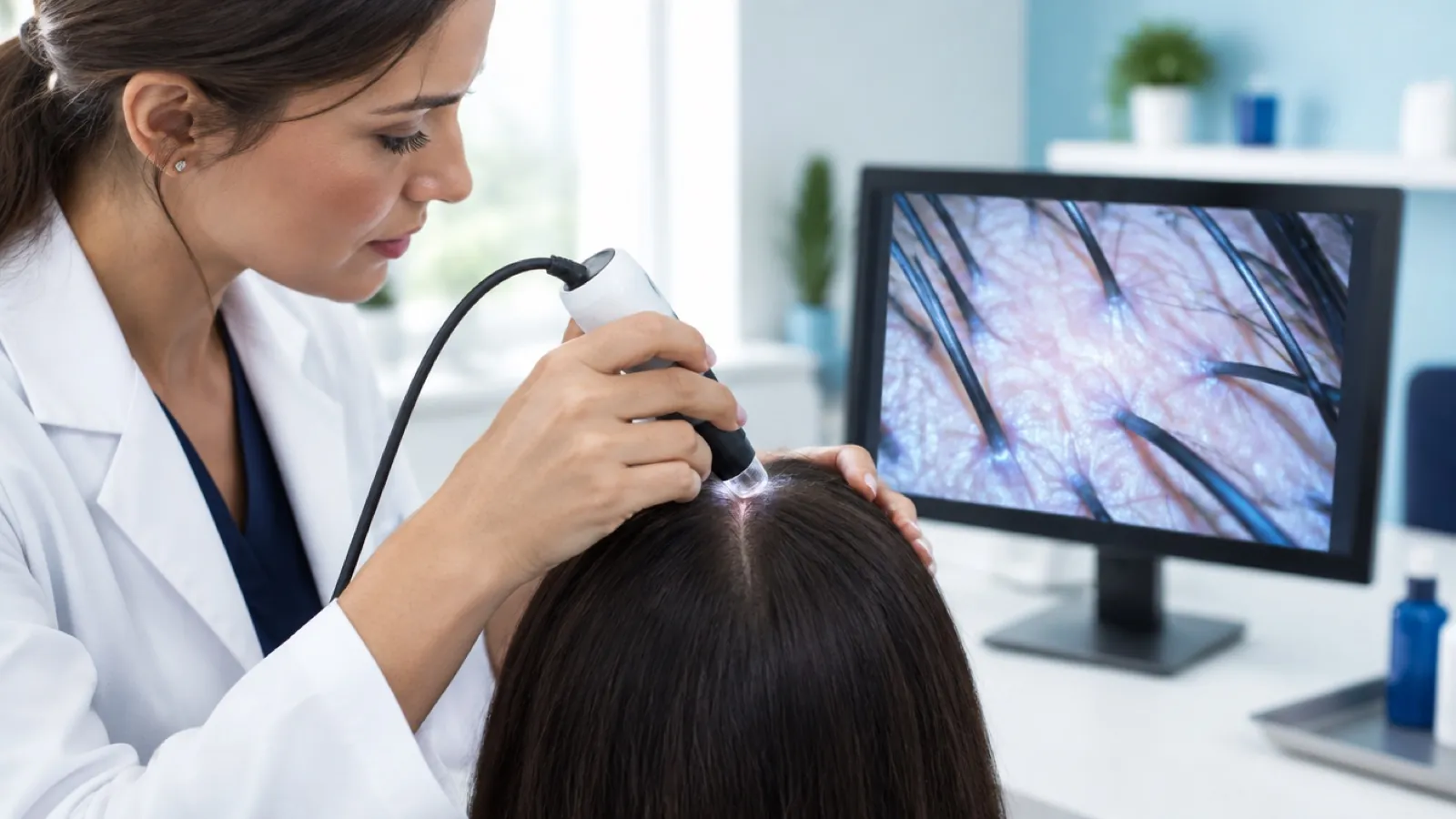
What Is Trichoscopy? Scalp Dermoscopy Explained
What is trichoscopy? A plain guide to scalp dermoscopy: how a trichoscope works, what it shows, who uses it, and how it compares with a biopsy or pull test.
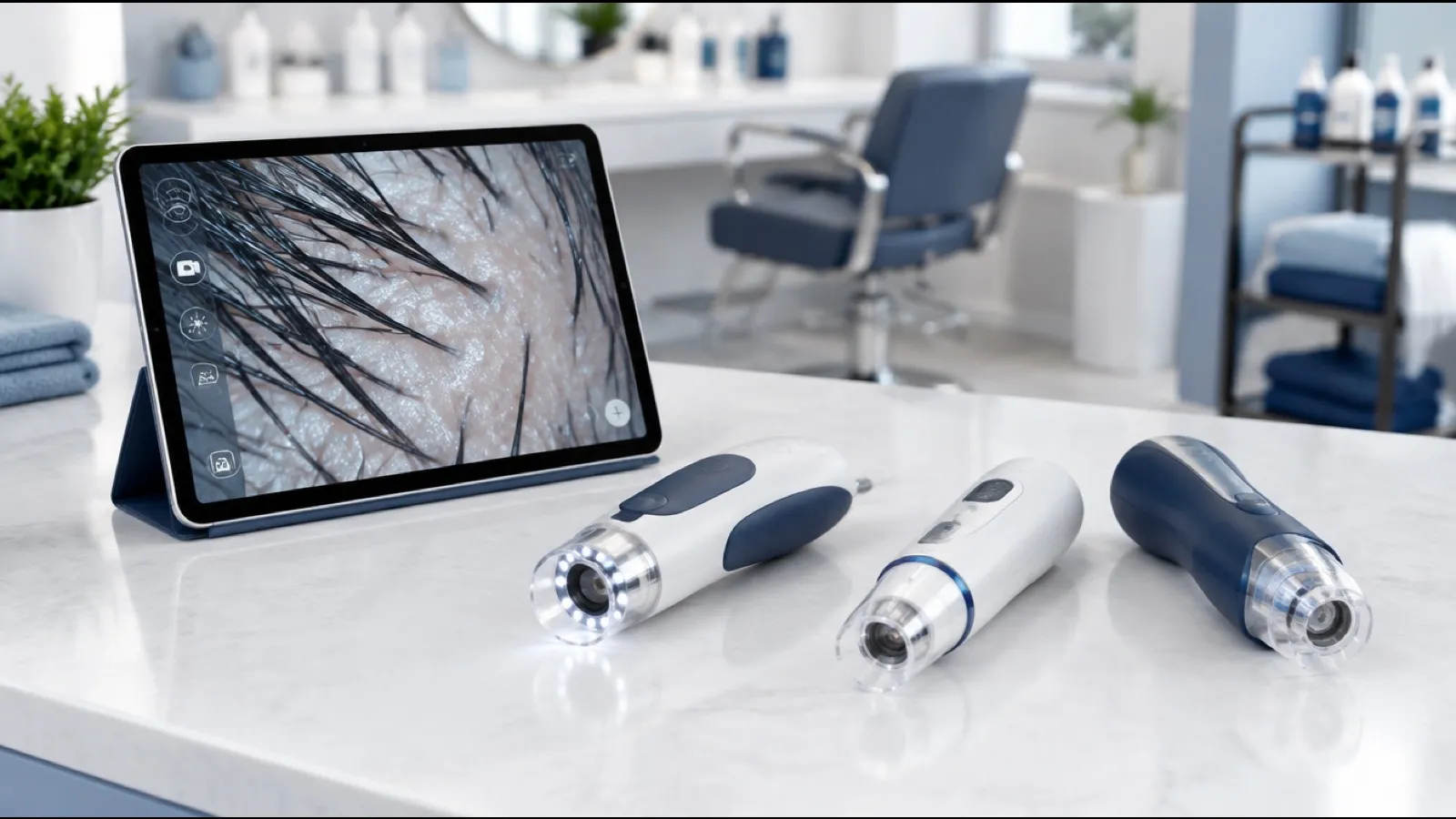
Best Scalp Camera for Salon Use: What to Compare First
The best scalp camera for salon use is the one that gives clear, repeatable images. Compare magnification, lighting, storage, display and tip hygiene.

Hair and Scalp Consultation: Full Guide and Intake Form
A hair and scalp consultation in six stages, with a ready-to-copy intake question list, an observation checklist, summary wording and a follow-up schedule.