

Postpartum Hair Loss: A Stylist's Guide to the Timeline
Postpartum hair loss usually peaks about four months after birth and eases by the first birthday. A stylist's guide to the timeline, the talk and the cut.
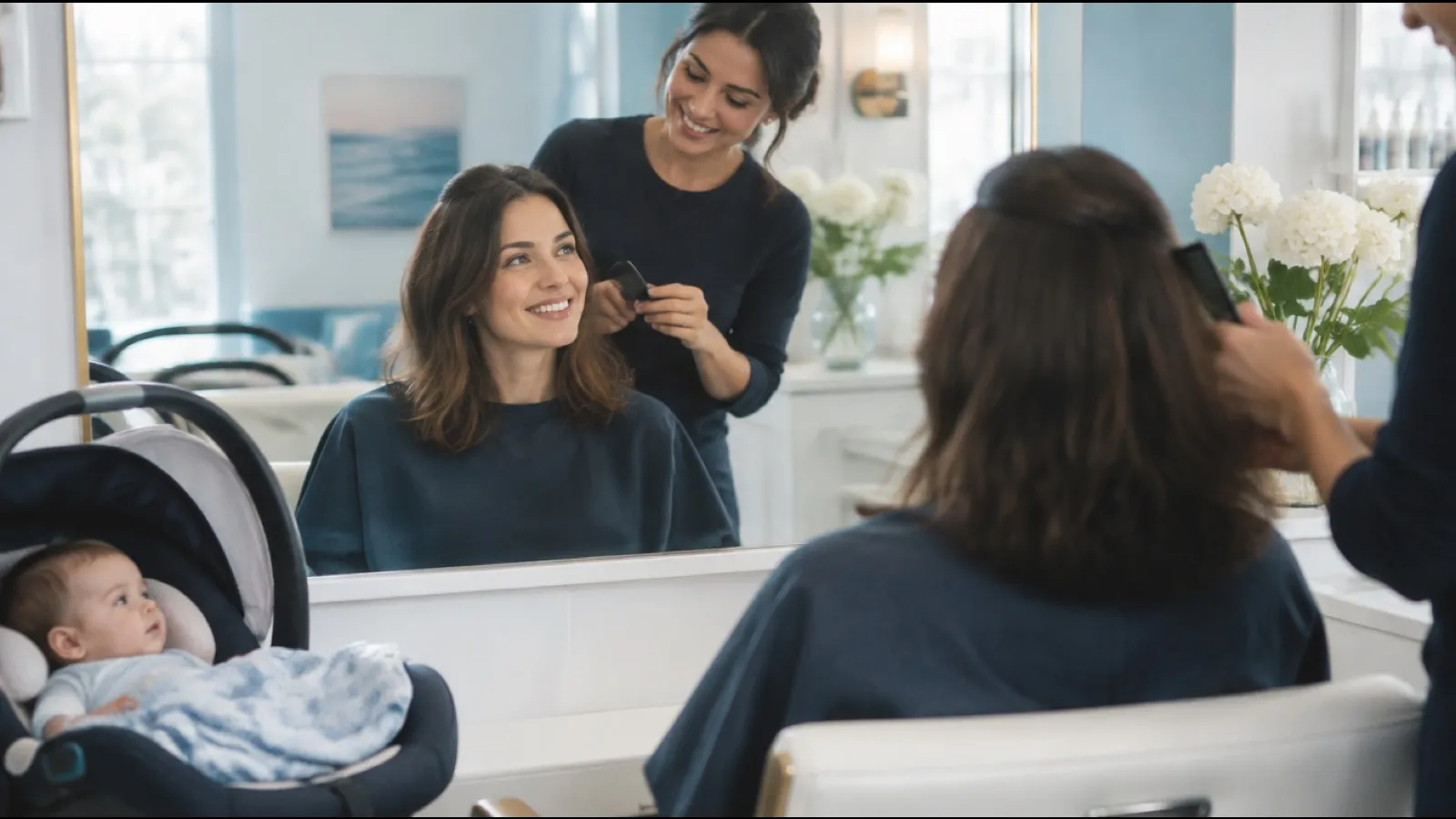
Postpartum hair loss is temporary excessive shedding that many women notice a few months after giving birth. The American Academy of Dermatology (AAD) says it usually peaks about four months after the birth, and most women see normal fullness return by their child's first birthday.
That is the answer your client needs when she sits down with a handful of hair and a worried face. She will often ask you before she asks her doctor. This guide gives you the timeline, the words, and the cosmetic options. It also covers the point where the right move is a referral.
What is postpartum hair loss?
Postpartum hair loss is a heavy, temporary shed after childbirth. The AAD says it is caused by falling estrogen levels and that dermatologists consider it excessive hair shedding, not true hair loss. The medical term for this kind of shedding is telogen effluvium.
Everyone sheds. The AAD puts normal shedding at 50 to 100 hairs a day. After a birth, far more hairs than usual shed over the same weeks, so the change feels sudden. The follicles are still there. For the general mechanism, see the telogen effluvium guide for stylists and the hair growth cycle stages.
When does postpartum hair loss start, and how long does it last?
The AAD says many new mothers see noticeable shedding a few months after having a baby, with a peak at about four months. Most women regain normal fullness by the child's first birthday, and many get there earlier. If fullness has not returned after one year, the AAD suggests seeing a dermatologist.
| Time after birth | What the AAD says | What you may see in the chair | What a stylist can do |
|---|---|---|---|
| First few months | Shedding becomes noticeable a few months after the birth | Client mentions more hair in the shower or brush | Explain the timeline before it peaks |
| About four months | Shedding usually peaks | Thinner ponytail, more hair in the bowl, less density at the temples | Reassure, handle gently, adjust the cut |
| Up to the first birthday | Most women regain normal fullness, many earlier | Short new hairs along the hairline and part | Blend regrowth, keep styling low-stress |
| After one year | If fullness has not returned, see a dermatologist | Density still clearly reduced | Refer to a dermatologist or physician |
Individual timing varies. Use the table as the usual course described by the AAD, not as a promise to any one client.
What does postpartum shedding look like in the chair?
Postpartum shedding tends to show as more hair coming out all over the head during shampooing and combing, with a thinner ponytail and no bald patches. Later, many clients have short new hairs along the hairline and part. These are observations from the chair, and they do not confirm a cause.
Things a client may say
- "It is coming out in clumps in the shower."
- "My ponytail is half the size."
- "I have these little hairs sticking up at the front."
- "Is this normal? Am I going bald?"
Things that do not fit the usual picture
Suggest a medical visit sooner if you see or hear about any of these:
- Smooth round or oval bald patches
- A sore, burning or very itchy scalp
- Redness, scaling, bumps or crusting
- A widening part or receding hairline that keeps progressing
- Shedding still heavy well past the first birthday
Other types of hair loss can start in the same period. The types of hair loss field guide shows how patterns differ, and hair shedding vs hair loss explains why the distinction matters.
What should a stylist tell a client with hair loss after pregnancy?
Tell her three things: this kind of shedding is common, the AAD says it usually peaks around four months and settles by the first birthday, and you will keep an eye on it with her. Then say when a doctor should look. Do not diagnose, and do not suggest supplements or treatments.
A script that works:
- Name the worry. "A lot of new moms notice this. I can see why it is upsetting."
- Give the timeline, with the source. "The American Academy of Dermatology says shedding after a birth usually peaks around four months and most women are back to normal fullness by the baby's first birthday."
- Stay in your lane. "I cannot tell you for sure that this is what is happening. Your doctor can."
- Offer what you can do. "Today I can shape the cut so it looks fuller and show you a gentler way to style it."
- Set the checkpoint. "If it is not filling back in by the first birthday, or if you see bald spots or your scalp hurts, book a dermatologist."
Questions about vitamins, medication, thyroid, iron or breastfeeding belong with her physician. Say so plainly. A tired new mother gets advice from every direction, and a calm, sourced answer from her stylist carries weight. More wording is in how to talk to a client about hair loss.
Which cuts and styling choices help new mom hair thinning look fuller?
Cosmetic choices can make thinner hair look fuller while it recovers. The AAD notes a short style can make hair look fuller and is easier to manage with a baby. It also suggests volumizing shampoo and lighter conditioner used mainly on the ends. None of this changes the shedding itself.
Cut
- Shorter or blunt shapes. Removing thin, see-through ends makes the perimeter look denser. Offer it, never push it. Hair carries a lot of identity during a year of big change.
- Soft face-framing pieces. These help blend short regrowth at the hairline.
- A shifted part. Moving the part can cover a sparser area.
Products, per the AAD's tips for new mothers
- Use a volumizing shampoo. The AAD notes these tend to contain ingredients such as protein that coat the hair and make it look fuller.
- Avoid shampoos labeled as conditioning shampoos, which can weigh hair down.
- Choose a conditioner made for fine hair, with a lighter formula.
- Apply conditioner mainly to the ends, not the scalp or the whole length.
- Skip intensive conditioners, which are heavy.
Handling
These are general gentle-styling practices, not medical advice:
- Keep tension low. Skip tight ponytails and tight styles that pull at the hairline.
- Detangle from the ends up with a wide-tooth comb.
- Use moderate heat and avoid stacking chemical services if the hair feels fragile.
Be honest about limits. A cut makes hair look fuller. It does not slow shedding or speed regrowth, and no salon service should be sold as doing that.
When should a client see a doctor about postpartum hair loss?
Per the AAD, a client should see a dermatologist if her hair has not regained its normal fullness after one year, because something else may be causing the loss. Refer sooner for patches, scalp pain, burning, visible scalp changes, or a clear thinning pattern.
Keep simple records so you can spot the difference: a dated note or photo of the part and hairline at each visit, with the client's consent. A scalp scope makes those photos more useful. If you are unsure, refer. The list in when to refer a client to a dermatologist covers the signs that should not wait.
How can stylists get more confident with postpartum hair loss?
Know the AAD timeline by heart, practice the conversation, and learn enough hair science to recognize when a client's shedding does not fit. Postpartum hair loss is one of the most common concerns you will hear, and a clear, sourced answer builds trust for years.
USTI's trichology pathway starts with the Hair Loss Practitioner course, a 2 day live virtual class with educators, and the scalp health courses add service skills. The training is educational and non-medical. It prepares you to recognize what you are seeing, support the client through a stressful year, and refer when postpartum shedding does not follow the usual course.
New to the field? Start with What is trichology? or look up a term in the trichology glossary.
Sources
Frequently asked questions
When does postpartum hair loss start?
The American Academy of Dermatology says many new mothers see noticeable hair loss a few months after having a baby. Shedding usually peaks about four months after giving birth. A client who had a full head of hair late in pregnancy may be alarmed by the change, so it helps to explain the timing before it happens.
How long does postpartum hair loss last?
According to the American Academy of Dermatology, most women see their hair return to its normal fullness by their child's first birthday, and many regain normal fullness even earlier. If fullness has not returned after one year, the AAD suggests seeing a dermatologist, because something else may be causing the hair loss.
Is postpartum hair loss permanent?
The American Academy of Dermatology describes it as temporary excessive shedding, not true hair loss. The medical name is telogen effluvium. Most women regain normal fullness within a year of the birth. A stylist should not promise an outcome for any one client. If hair has not recovered after a year, a dermatology visit is the next step.
What causes hair loss after pregnancy?
The American Academy of Dermatology states that the excessive shedding is caused by falling estrogen levels after birth. It is a normal response and dermatologists call it excessive hair shedding. Other causes of hair loss can occur at the same time, which is why shedding that does not settle within a year should be checked by a doctor.
What haircut is best for postpartum shedding?
The American Academy of Dermatology notes that a short style can make hair look fuller and can be easier to manage with a baby. Not every client wants to go short. Blunt ends, soft face-framing pieces that blend regrowth, and a shifted part are cosmetic options a stylist can offer without a big change in length.
Should a stylist recommend supplements or treatments for postpartum hair loss?
No. Supplements, medications and anything related to breastfeeding are questions for the client's physician. A stylist can share what the American Academy of Dermatology says about timing, suggest lighter cosmetic products that add volume, handle the hair gently, and recommend a medical visit if the shedding seems unusual or lasts beyond a year.
When should a postpartum client see a doctor about hair loss?
The American Academy of Dermatology advises seeing a dermatologist if hair has not regained its normal fullness after one year. A stylist should also suggest a medical visit sooner for smooth bald patches, scalp pain, burning, redness or scaling, or loss in a clear pattern, because those do not match typical postpartum shedding.
This article is educational and is not medical advice. USTI teaches professionals to recognize, support and refer.
Turn this knowledge into a certification.
Learn hair and scalp science with USTI educators, from your first course to clinical training.
Explore trichology coursesRelated articles
Alopecia Areata: A Stylist's Guide to Bald Patches
Alopecia areata explained for stylists: the signs you may spot first, what to say when you find a bald patch on a client, cosmetic support and when to refer.
CCCA Hair Loss: Early Signs Every Stylist Should Know
CCCA hair loss often starts quietly at the crown. Learn the early signs a stylist may notice, how it differs from traction alopecia, and when to refer.
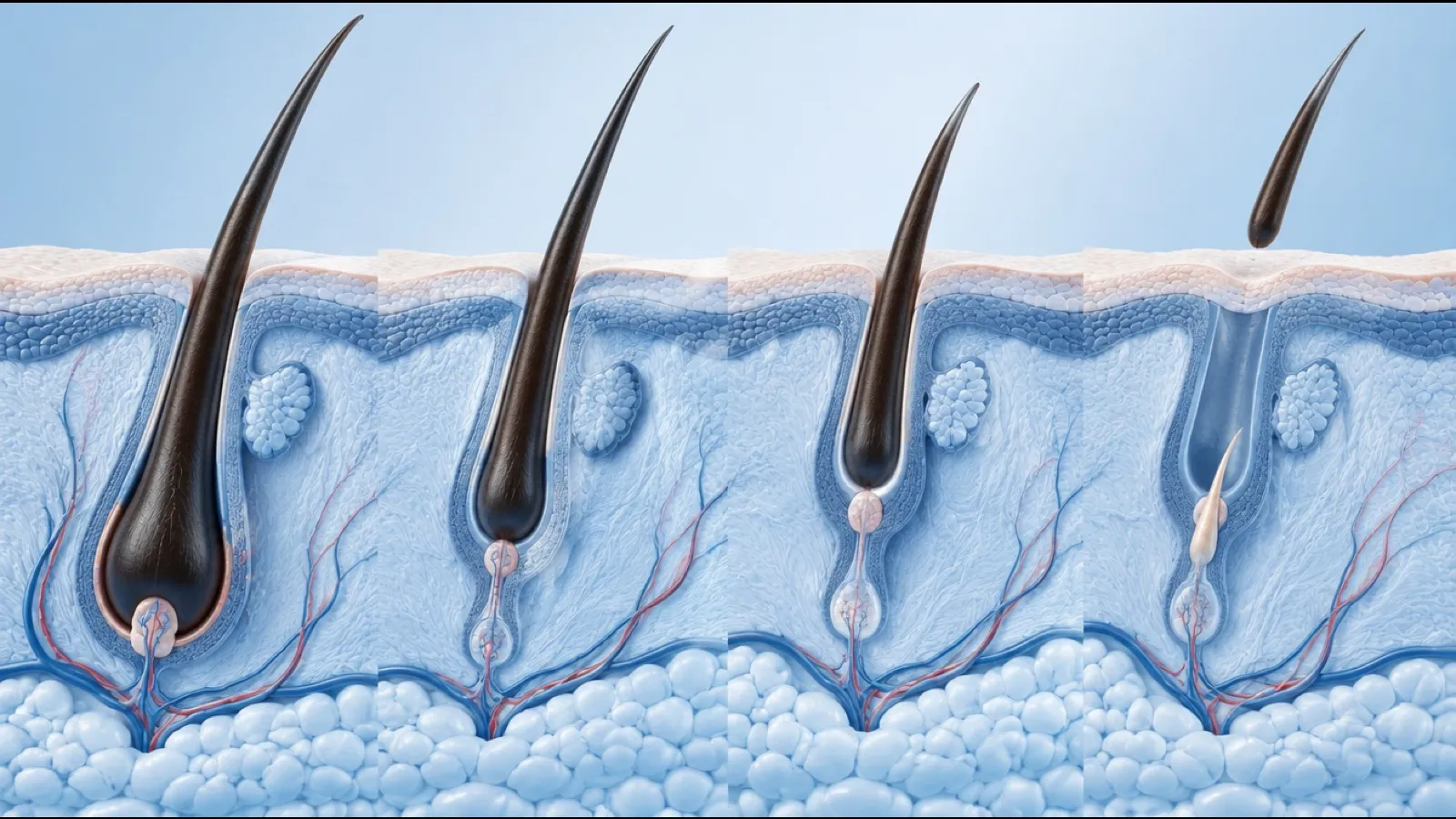
Hair Growth Cycle Stages: Anagen, Catagen, Telogen, Exogen
The hair growth cycle stages explained for stylists: anagen, catagen, telogen and exogen, how long each lasts by source and what the cycle means at the chair.