

Trichology for Barbers: What to Notice, Say and Refer
Trichology for barbers explained: the scalp conditions barbers see, what to say to a client losing hair, when to refer, and how certification fits your shop.
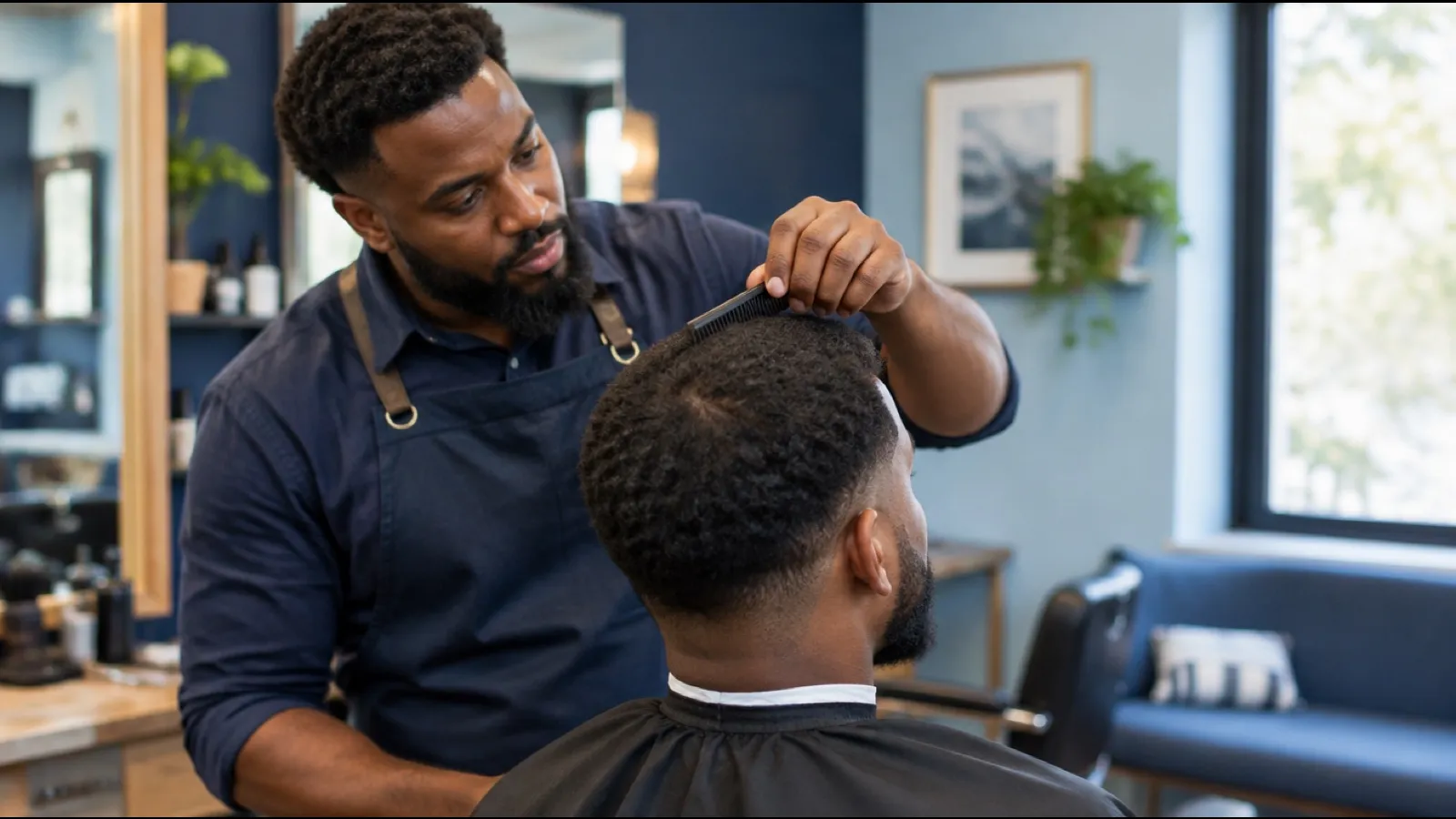
Trichology for barbers is non-medical education in hair and scalp science, built around what a barber actually sees in the chair. It teaches you to recognize changes in a client's hair and scalp, support him with accurate information and good service, and refer him to a dermatologist or physician when something needs medical attention.
No one sees a man's crown and nape as often, or as closely, as his barber. Regular clients sit in your chair every few weeks, under good light, with their hair cut short. That makes you the person most likely to notice a change first. Trichology training gives you a way to act on it without stepping outside your role.
What is trichology for barbers?
Trichology for barbers applies the study of hair and scalp to barbershop work. It covers how hair grows, what common hair loss patterns and scalp conditions look like, how to examine a scalp, how to talk with a client about what you see, and when to refer. It is educational and non-medical.
The role has three parts.
- Recognize. Notice and describe changes in density, hairline, scalp skin and hair quality.
- Support. Give accurate general information, adjust the cut and your technique, and keep tracking the change over time.
- Refer. Send the client to a dermatologist or physician when signs point to a possible medical condition.
A trichologist is not a physician, and "trichologist" is not a state-licensed medical title in the US. A barber with trichology training does not diagnose, treat or prescribe. For the full division of roles, see trichologist vs dermatologist.
What scalp conditions do barbers see most often?
Barbers most often notice thinning at the crown or hairline, smooth patches of missing hair, flaking and scale, redness, and bumps at the nape. These are observations. Each may be associated with more than one condition, and only a medical provider can say which. Your job is to see it, describe it and know what to do next.
| What you notice | What it may be associated with | What to do |
|---|---|---|
| Thinning at the crown or a receding hairline | Hereditary (male pattern) hair loss, among other causes | Mention it with care, suggest a dermatologist if he wants answers |
| Smooth, round or oval bald patches | Alopecia areata, among other causes | Describe what you see, refer to a dermatologist |
| White or yellowish flakes, with or without redness | Dandruff, seborrheic dermatitis or product buildup | Ask about his routine, refer if there is redness, swelling or it persists |
| Bumps at the nape or back of the scalp | Razor bumps or acne keloidalis nuchae | Avoid irritating the area, refer to a dermatologist |
| Scaly, inflamed or broken-hair patches | Possible scalp infection or other skin disease | Follow your state sanitation rules, refer to a physician |
Thinning at the crown or hairline
The American Academy of Dermatology (AAD) describes male pattern hair loss as beginning with a receding hairline or a bald spot on the top of the head. It calls hereditary hair loss the most common cause of hair loss worldwide. You may see it months before the client does, because he cannot see his own crown.
Patches
The AAD describes alopecia areata as hair loss that tends to develop quickly, often causing a few bald patches. A smooth patch that was not there at the last cut is worth a calm mention and a referral. Do not assume your clippers caused it, and do not name the condition.
Flaking
The AAD notes that dandruff may be the mildest form of seborrheic dermatitis. Both cause white to yellowish scale. The difference is that seborrheic dermatitis involves inflammation, with swelling and discolored skin. The AAD states it is not contagious. Flakes can also be dry skin or product residue. Our guide to dandruff vs dry scalp vs buildup explains how to tell them apart by observation.
Bumps at the nape
The AAD describes acne keloidalis nuchae as a common skin condition that is often mistaken for acne or razor bumps on the back of the neck and scalp. It is most common in Black males and often begins between ages 14 and 25. Left untreated, it can lead to raised scars and hair loss. The AAD encourages anyone with bumps on the back of the head or neck to see a dermatologist. This is one of the most valuable things a barber can catch early.
Scaly or inflamed patches
The AAD lists scalp infection as a cause of hair loss and describes scaly, sometimes inflamed areas on the scalp. It also notes that ringworm is contagious. If you see a patch like this, follow your state board's sanitation and infection control rules and recommend that the client see a physician.
What should a barber say to a client losing hair?
Ask first, describe what you see, and offer a next step. Keep it private, brief and factual. A barber hair loss client conversation works best when you speak as an observer, not as a doctor. State what has changed, ask if he has noticed, and tell him who can give him a real answer.
A chair-side script
- Ask permission. "Can I mention something I've noticed on your scalp?"
- Describe, don't diagnose. "The hair at your crown looks thinner than it did a few cuts back."
- Check in. "Have you noticed it yourself? Has anything changed lately?"
- Offer the next step. "A dermatologist can tell you what type of hair loss it is. I'd get it looked at sooner instead of later."
- Offer what you can do. "In the meantime, I can adjust the cut so it sits well, and I'll keep an eye on it each visit."
For bumps at the nape: "I'm seeing some bumps back here at your neckline. I'm going to go easy on this area today. I'd have a dermatologist take a look, because it's easier to deal with early."
What to say and what not to say
| Say this | Not this |
|---|---|
| "I'm noticing more scalp showing at the crown." | "You're going bald." |
| "There's a smooth patch here about the size of a coin." | "That's alopecia." |
| "I can't tell you the cause. A dermatologist can." | "It's just stress." |
| "I'd get these bumps checked." | "Those are just razor bumps, they'll go away." |
| "Here's what I can do with the cut." | "Use this product and it will grow back." |
| "Want me to keep track of it at each visit?" | "Don't worry about it." |
Three rules sit behind the script.
- Keep it private. Lower your voice or wait until the chairs next to you are empty. Hair loss is personal.
- Never promise regrowth. You do not know the cause, so you cannot know the outcome.
- Never recommend medication. That is a physician's decision.
When should a barber refer a client to a dermatologist?
Refer whenever a change is sudden, patchy, painful, inflamed, scarring or spreading, or whenever the client is worried. Referral is not a failure of service. The AAD states that a dermatologist can tell a person what type of hair loss he has, and that seeing one early for nape bumps can prevent raised scars and hair loss.
Signs that call for a referral:
- Smooth bald patches that appear quickly
- Bumps, firm raised areas or scars at the nape or back of the scalp
- Scaly, crusted, swollen or discolored areas
- Sores, bleeding, pain, burning or strong itch
- Thinning that is clearly progressing between visits
- Any hair loss along with other health changes the client mentions
When you refer, tell him what you saw, where and when you first noticed it, so he can pass it on. A phone photo of the crown or nape, taken with his consent, helps him show a doctor what he cannot see himself. For a longer list of signs, read when to refer a client to a dermatologist.
How does barber scalp analysis work?
Barber scalp analysis is a short, structured look at the scalp before or during the service. You check the hairline, temples, crown and nape under good light, part the hair where length allows, and note density, skin color, scale and bumps. Many trained barbers add a magnified view and photos to track change.
A simple routine:
- Look at the dry scalp before shampooing or cutting.
- Check four zones: hairline and temples, crown, sides, nape.
- Note what you see in plain words, such as "more scalp visible at crown" or "bumps along the neckline".
- With consent, take a photo for comparison at the next visit.
- Use a scalp scope if you have one, to view the scalp surface and hair shafts under magnification.
- Decide: continue as normal, adjust the service, or refer.
The method is the same one stylists use, covered in scalp analysis for hairstylists.
Is a barber trichology certification worth it?
A barber trichology certification is worth it if clients already ask you about thinning and scalp problems and you want to answer with training behind you. It gives you a consultation method, accurate language and a referral process. It does not change your legal scope, which is set by your state barber board.
What it adds to a barbershop:
- Confidence in the conversation. You know what to say and what to leave to a doctor.
- A consultation service. A structured scalp check is something clients value and return for.
- Earlier referrals. Catching nape bumps or patches early is a real service to the client.
- Trust. Clients stay with the barber who noticed and spoke up.
USTI offers a barber trichology course written for barbershop work. Barbers who want to go further can follow the trichology pathway, which runs from Hair Loss Practitioner to Associate Trichologist to Clinical training, with certification exams through the American Medical Certification Association (AMCA). The same route is described step by step in how to become a trichologist.
Trichology for barbers comes down to using the view you already have. You see the crown, the hairline and the nape more often than anyone else in a client's life. With training, you can describe what you see accurately, keep the conversation respectful, and send him to the right medical provider at the right time.
New to the field? Start with What is trichology? or look up a term in the trichology glossary.
Sources
- American Academy of Dermatology, Hair loss: Who gets and causes: https://www.aad.org/public/diseases/hair-loss/causes/18-causes
- American Academy of Dermatology, Types of hair loss: https://www.aad.org/public/diseases/hair-loss/types
- American Academy of Dermatology, Male pattern hair loss: https://www.aad.org/public/diseases/hair-loss/treatment/male-pattern-hair-loss-treatment
- American Academy of Dermatology, Acne keloidalis nuchae: Overview: https://www.aad.org/public/diseases/a-z/acne-keloidalis-nuchae-overview
- American Academy of Dermatology, Seborrheic dermatitis: Overview: https://www.aad.org/public/diseases/a-z/seborrheic-dermatitis-overview
- American Academy of Dermatology, Ringworm: Overview: https://www.aad.org/public/diseases/a-z/ringworm-overview
Frequently asked questions
What is trichology for barbers?
Trichology for barbers is non-medical education in hair and scalp science, applied to barbershop work. It teaches a barber to recognize changes such as thinning, patches, flaking and bumps, to talk about them accurately, and to refer clients to a dermatologist or physician when needed. It does not train a barber to diagnose or prescribe.
What should a barber say to a client losing hair?
Ask permission, describe what you see and offer a next step. For example: I've noticed the hair at your crown looks thinner than at your last few cuts. Have you noticed it? A dermatologist can tell you what type of hair loss it is. Avoid naming a condition, guessing at a cause or promising regrowth.
Can a barber diagnose hair loss or scalp conditions?
No. Diagnosis is a medical act and belongs to a dermatologist or physician. A barber can observe, describe and record what they see on the hair and scalp, adjust the service, and recommend that the client seek medical advice. That holds true with or without a barber trichology certification.
What scalp conditions do barbers see most often?
Barbers commonly notice thinning at the crown or hairline, smooth round patches of hair loss, flaking and scale, redness, and bumps at the nape. These are observations, not diagnoses. They may be associated with conditions such as hereditary hair loss, alopecia areata, seborrheic dermatitis or acne keloidalis nuchae, which only a medical provider can confirm.
When should a barber refer a client to a dermatologist?
Refer when you see sudden or patchy hair loss, bumps or raised scars at the nape, scaly or inflamed areas, sores, pain, or any change that is spreading or that worries the client. Early medical attention matters. The American Academy of Dermatology notes that seeing a dermatologist early for nape bumps can prevent raised scars and hair loss.
Is a barber trichology certification worth it?
It is worth it if clients already ask you about thinning or scalp problems and you want trained, accurate answers. Certification adds consultation skills, scalp analysis and a clear referral process to your service. It does not make a barber a medical provider, and it does not guarantee higher income. Results depend on how you apply it.
This article is educational and is not medical advice. USTI teaches professionals to recognize, support and refer.
Turn this knowledge into a certification.
Learn hair and scalp science with USTI educators, from your first course to clinical training.
Explore trichology coursesRelated articles

Trichology vs Cosmetology: What Is the Difference?
Trichology vs cosmetology: how the two differ in focus, training, licensing and services, what cosmetology school teaches about the scalp, and how they combine.

Associate Trichologist Certification: AMCA Exam Guide
Associate Trichologist Certification exam guide: AMCA format, 100 questions, 2 hours, remote proctoring, the seven topic areas and a four-week study plan.

Can a Cosmetologist Become a Trichologist? Yes: How
Can a cosmetologist become a trichologist? Yes. See the certification pathway for licensed stylists, what changes behind the chair, and how titles compare.